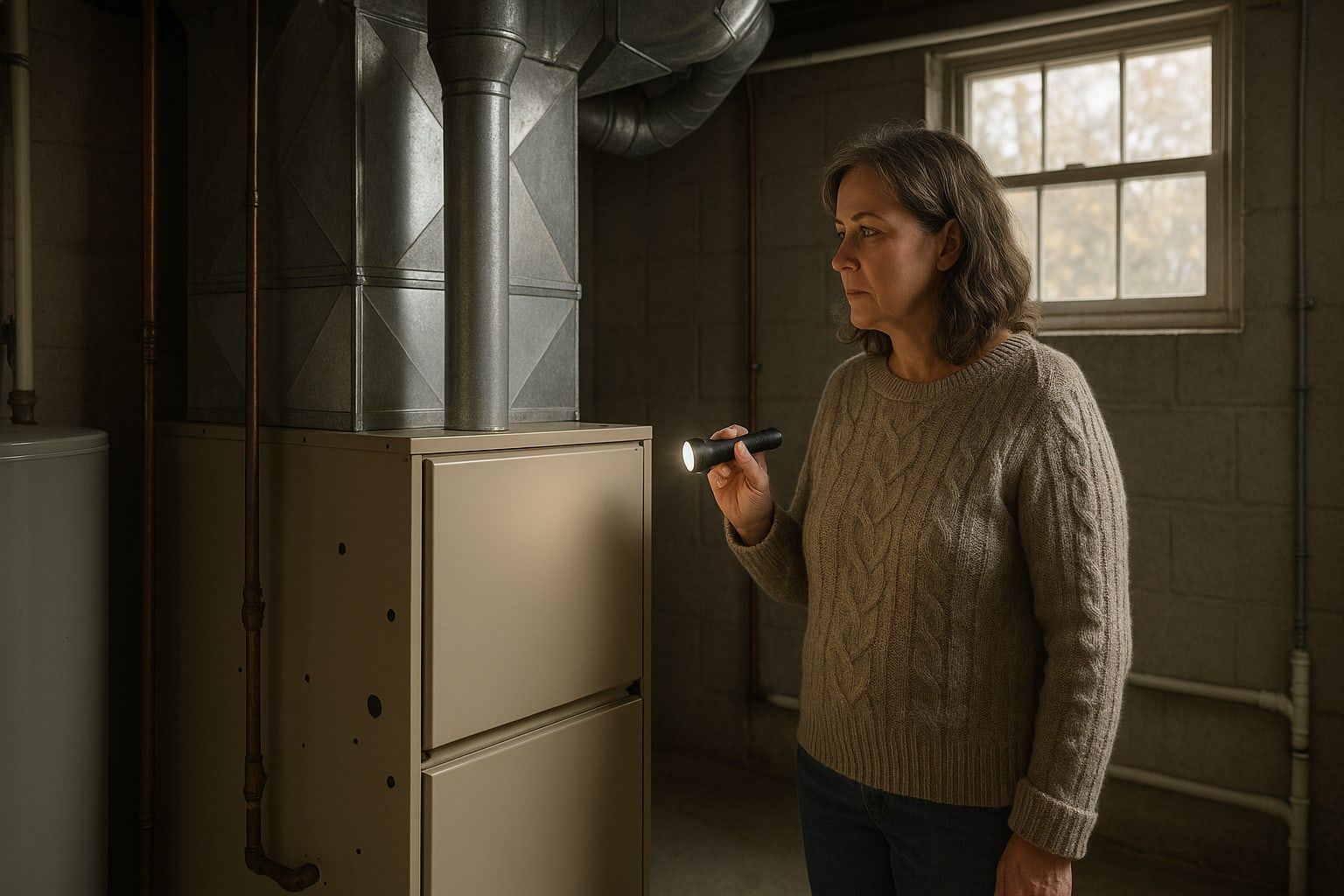
It's a 92-degree August afternoon in the Valley, your heat pump is humming along outside, and the air coming out of the vents feels like the system gave up trying. If you're new to heat pumps, the first question is usually "wait, is this thing broken or is it just not built for this?" If you've run one for years, you know it should be keeping up. Either way, warm air in August means something needs attention.
Good news first: heat pumps cool exactly the way a central AC does, and most "not cooling" complaints trace back to the same short list of causes, several of which you can check yourself in a few minutes. A few problems are heat-pump-specific, though, and knowing which is which saves you money and a sweaty week of guessing.
This guide walks through why your heat pump isn't cooling, what to check before you call for heat pump repair in Staunton or anywhere in Augusta County, and which symptoms point to which fixes.
First, Two Quick Checks Worth Making
Before anything else, look at the thermostat. Confirm it's set to COOL, not HEAT or AUTO-changeover with a bad setpoint, and that the fan is on AUTO rather than ON. A fan set to ON blows room-temperature air between cooling cycles, which feels exactly like a failing system even when nothing is wrong. If your thermostat has an emergency or auxiliary heat setting, make sure nobody bumped it; aux heat running in summer will fight your cooling and spike your bill at the same time.
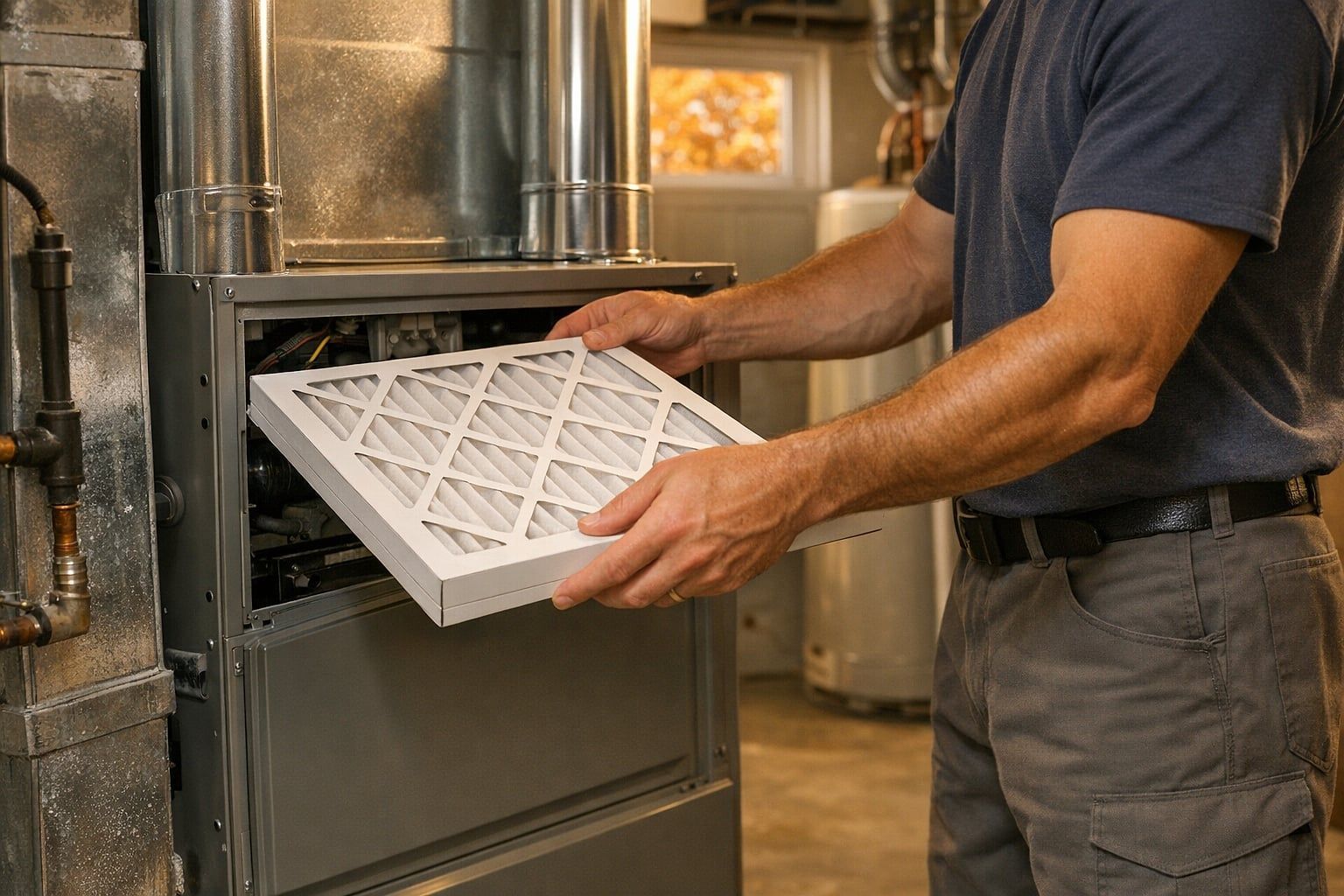
Second, the air filter. A clogged filter chokes airflow, and a heat pump starved for airflow can freeze its indoor coil into a block of ice and quit cooling entirely. If the filter is gray and packed, swap it, then give the system a few hours with the ice melted before judging whether the problem is fixed. During a Virginia summer, filters are worth checking every one to three months.
While you're at it, step outside and clear grass clippings, weeds, and mulch away from the outdoor unit. It needs about two feet of clearance on all sides to dump heat. We'd rather you check these three items yourself than pay us to.
Why Your Heat Pump Isn't Cooling: The Usual Suspects
If the basics check out and the air is still warm, the cause is usually one of these.
Low refrigerant.
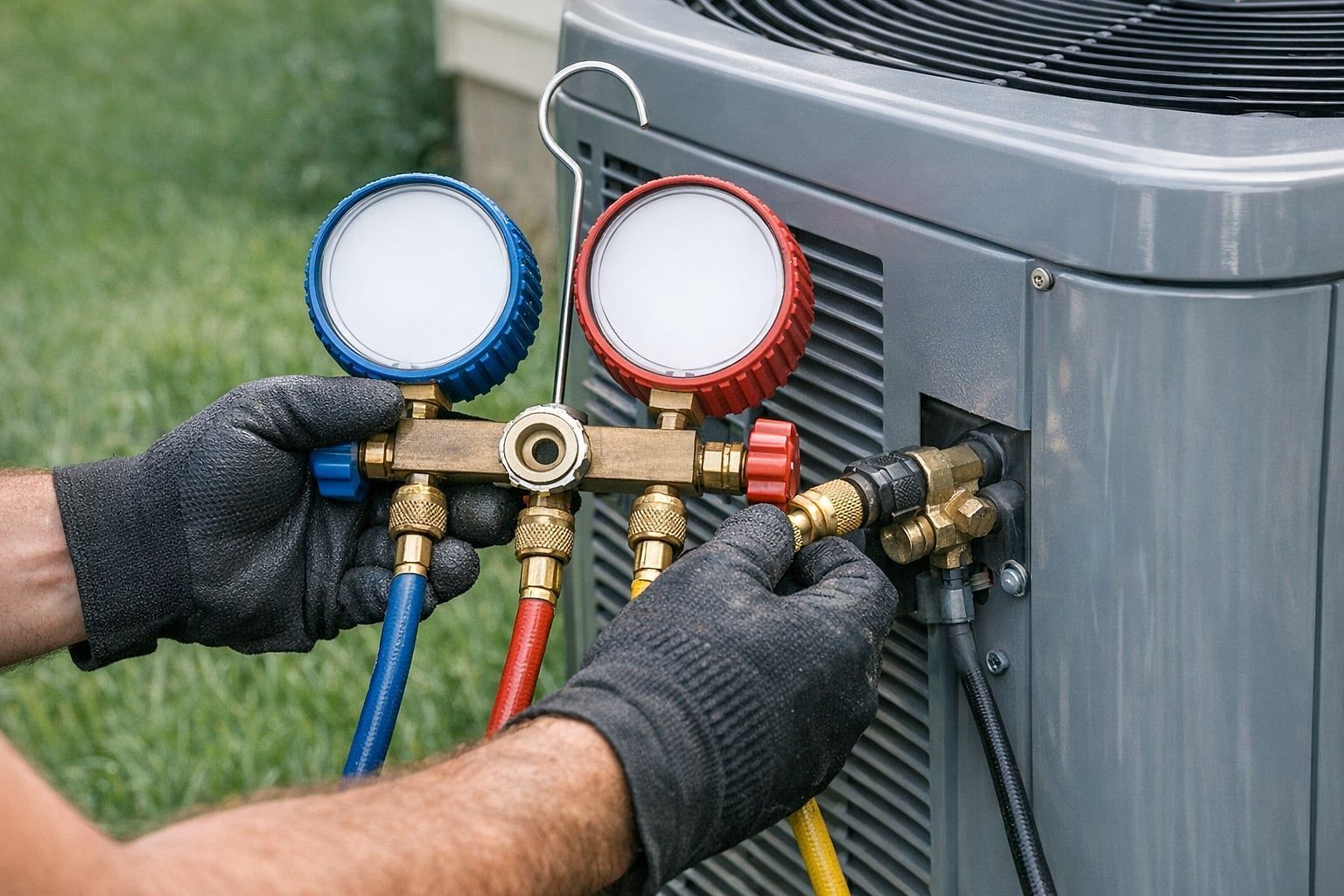
A heat pump doesn't consume refrigerant. If it's low, there's a leak, and "topping it off" without finding the leak just rents you a few weeks of cooling before the same problem returns. A proper repair finds and seals the leak, then recharges the system.
A stuck reversing valve.
This one is heat-pump-specific. The reversing valve is the part that flips the system between heating and cooling. When it sticks or its solenoid fails, the system can blow warm air in summer no matter what the thermostat says. Straight ACs don't have this part, which is why it matters that the technician works on heat pumps.
Dirty coils.
A grimy outdoor coil can't shed heat, and a dirty indoor coil can't absorb it. Either one drags cooling performance down until the house never quite catches up on hot afternoons.
Failed capacitor or contactor.
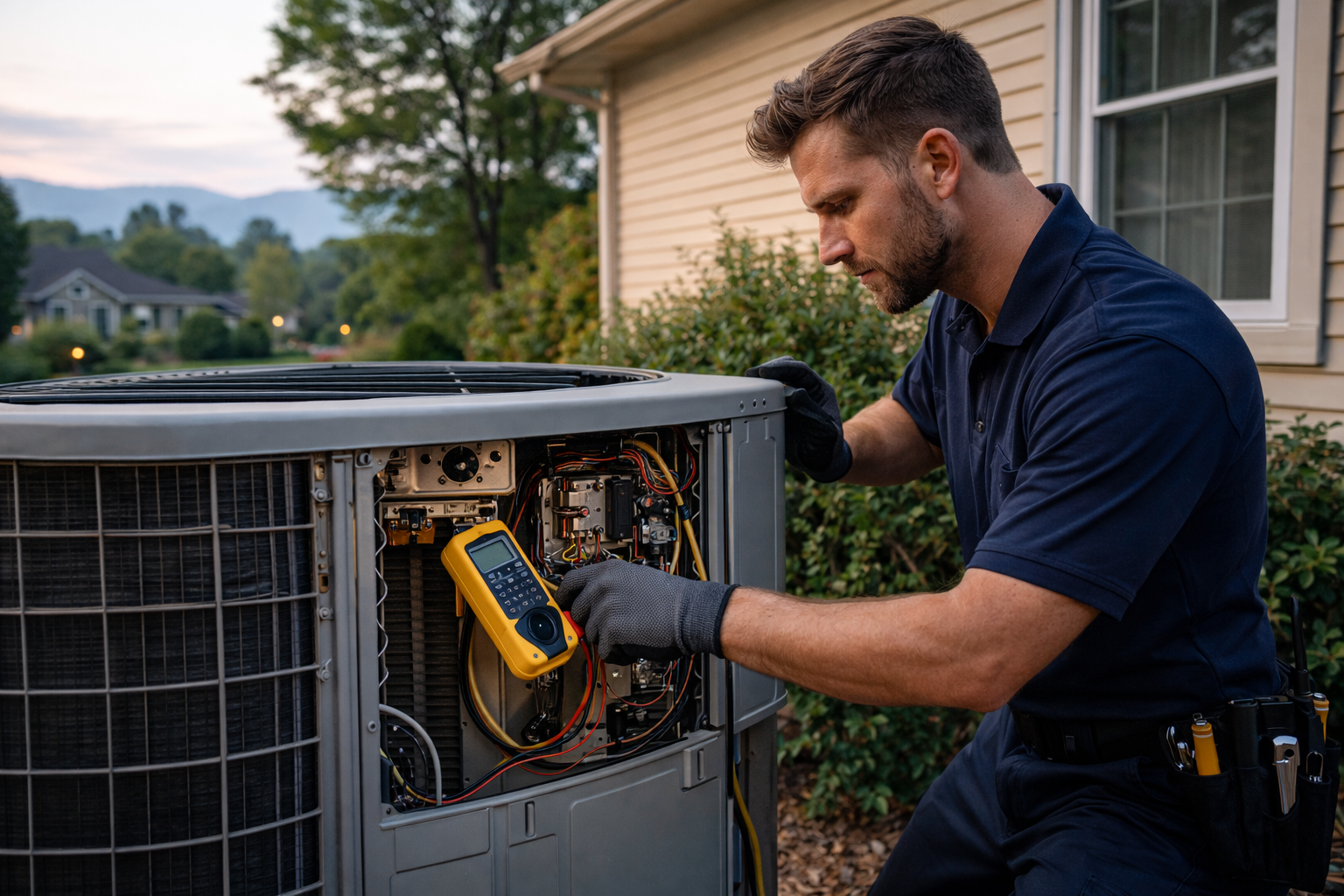
The most common electrical failures in any cooling system. The outdoor unit may hum without the fan or compressor starting, or the system may not start at all. Small parts and usually a quick repair, but not a DIY job.
Ice on the refrigerant lines, a breaker that keeps tripping, or a burning smell.
These mean stop. Shut the system down and call. Reset a tripped breaker once at most; if it trips again, it's protecting you from an electrical fault. Running a system through these symptoms is how a small repair becomes a dead compressor, the most expensive part in the machine.
Heat Pump Symptoms, Likely Causes, and What to Check First
Symptoms point toward causes, so here's how the common ones line up. Treat it as a starting point rather than a diagnosis: two different failures can produce the same warm air, which is why the diagnosis always comes first.
Common heat pump cooling symptoms and where to start
| Symptom |
Likely cause |
What to check first |
| Air blowing but not cold |
Thermostat on HEAT, fan set to ON, or aux heat engaged |
Thermostat mode, fan setting and setpoint |
| Weak airflow from the vents |
Clogged filter or a frozen indoor coil |
The filter, then look for ice on the lines |
| Outdoor unit hums but the fan does not spin |
Failed capacitor or contactor |
The breaker only; the rest needs a technician |
| Cools a little but never catches up |
Dirty outdoor or indoor coil, or low refrigerant |
Two feet of clearance around the outdoor unit |
| Warm air no matter what the thermostat says |
Stuck reversing valve or failed solenoid |
Confirm COOL mode, then call |
| Ice on the refrigerant lines in summer |
Restricted airflow or a refrigerant leak |
Turn cooling off and let it thaw |
| Breaker trips again after one reset |
Electrical fault |
Leave it off and call |
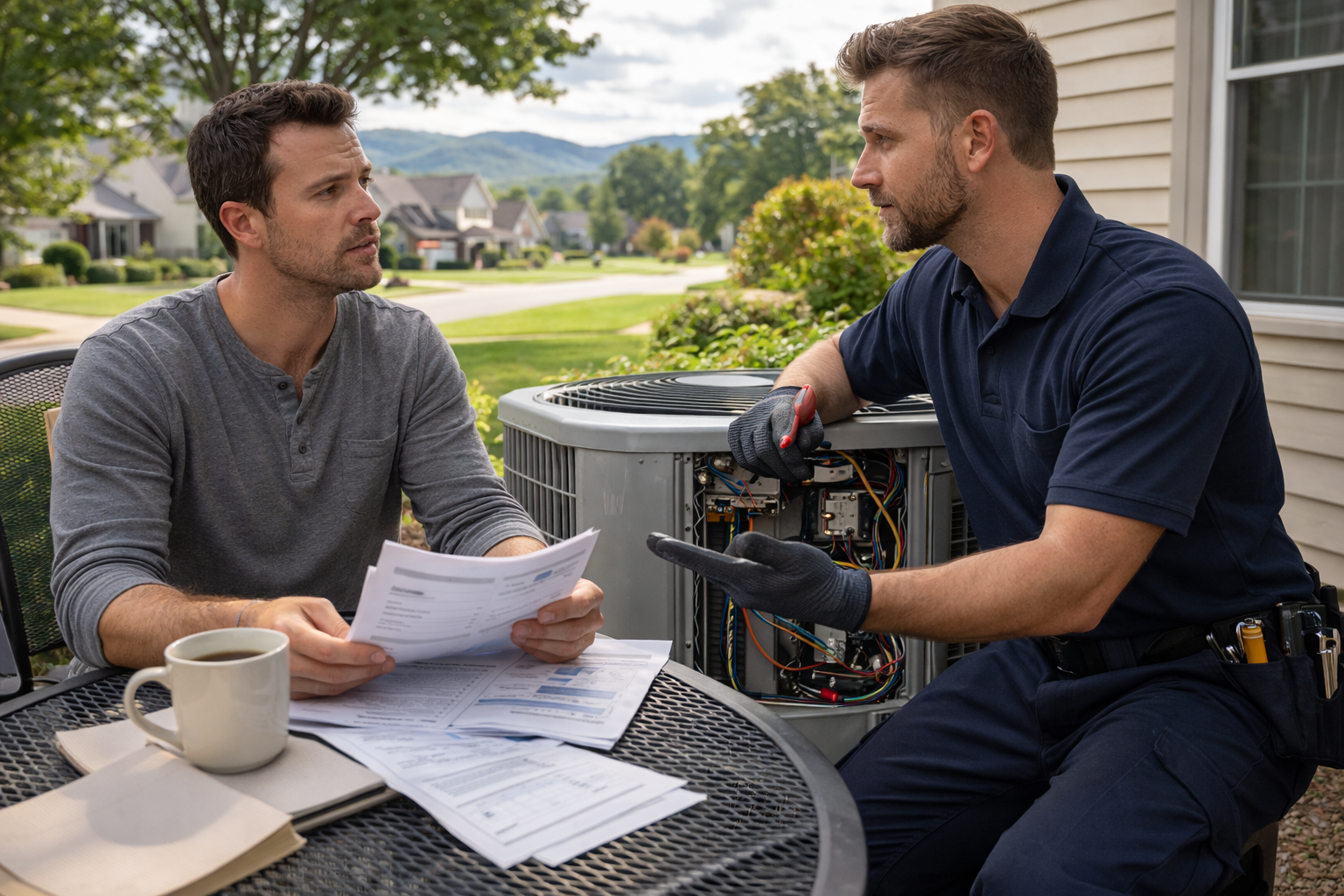
The pattern is simple: the everyday failures are small electrical parts and airflow problems that can often be put right the same day, while refrigerant leaks, reversing valves, and compressors are bigger jobs. What you should never accept is a replacement pitch before anyone has diagnosed the actual failure. A good technician explains what failed, walks you through the options, and lets you decide.
Why Heat Pumps Suit the Valley's Climate
A heat pump is one machine that cools in summer and heats in winter, and the Shenandoah Valley's climate sits right in its sweet spot: hot, humid summers it handles like any central AC, and winters that get cold but rarely stay brutal enough to overwhelm a modern unit. A heat pump can also be paired with a gas furnace in a dual-fuel setup, where the furnace takes over on the coldest nights and the heat pump does everything else at lower cost.
That dual-season role is also why a struggling heat pump deserves prompt attention in August. The same worn parts limping through cooling season will be the ones you're depending on for heat in January, and summer is the easier, cheaper time to deal with them. A seasonal tune-up catches many of these problems before they strand you in either season.
How to Keep a Heat Pump Cooling Through a Valley Summer
A heat pump in the Valley works two seasons, so the habits that keep it cooling also protect the heat you will want in January.
- Change the filter on a schedule.
Every one to three months, depending on the filter and whether you have pets. A clean filter is the cheapest protection against a frozen coil.
- Keep two feet clear around the outdoor unit.
Shrubs, fence panels, stacked firewood and grass clippings all restrict the airflow the unit needs to shed heat.
- Rinse the outdoor coil.
With the power off at the disconnect, a gentle garden hose from the inside out clears the cottonwood seed and clippings that pack into the fins.
- Leave the thermostat alone once it is set.
Large swings make a heat pump work harder to catch up on hot afternoons, and an accidental switch to emergency heat runs up the bill fast.
- Watch the condensate line.
A slow drain becomes a clogged drain, and a clogged drain becomes water where you do not want it.
- Get it serviced before the season.
A spring check finds a weak capacitor or a low charge while it is still an appointment rather than an emergency.
None of this replaces a technician, but it removes the most common reasons a heat pump falls behind in August, and it makes the problems that are left easier to diagnose.
Repair, or Time for a New Heat Pump?
The math mirrors the AC decision. If the unit is 12 to 15+ years old and the repair runs more than half the cost of a comparable new system, replacement usually wins on long-term value, especially with a compressor or a major refrigerant repair on the table. A younger unit with a failed capacitor or contactor should be fixed, full stop.
One wrinkle specific to 2026: equipment moved to new refrigerants like R-454B as of 2025, and prices moved with it. If you're weighing a big repair against what a new system actually costs in Augusta County, get both numbers from the same visit so you're comparing real figures instead of guesses. If you're considering heat pump installation in Waynesboro, Staunton, or anywhere in the county, we'll give you the repair and the replacement figures side by side and walk you through the reasoning, then leave the decision where it belongs: with you.
Why Valley Homeowners Call Integrity Air for Heat Pump Work
We are an HVAC company based at 199 Elliot St. in Staunton, and heat pumps are a core part of what we work on, alongside furnaces, mini-splits, boilers and central air. Here is what you can count on when you call.
- Same-day service.
A heat pump that quits on a 92-degree afternoon is not a next-week problem, and we treat it that way.
- Heating and cooling under one roof.
A heat pump does both jobs, so the same visit can look at how it will heat in January as well as how it cools now.
- Straight answers on repair versus replace.
If a repair is the better value on your system, that is what we will tell you.
- A local service area.
Staunton, Waynesboro, Fishersville, Verona, Crozet, Harrisonburg, Highland County and Augusta County.
Frequently Asked Questions
Why is my heat pump running but not cooling?
The most common causes are a clogged air filter, a thermostat set wrong (fan on ON, or aux heat engaged), a dirty outdoor coil, low refrigerant from a leak, a failed capacitor or contactor, or a stuck reversing valve. Check the filter, thermostat settings, and outdoor unit clearance first; the rest need a technician.
What does heat pump repair cost in Staunton, VA?
It depends on which part failed, so the diagnosis comes first. Small electrical parts like capacitors and contactors sit at the low end and are often fixed the same day, refrigerant leak repairs and reversing valves sit in the middle, and a compressor sits at the top, where replacement usually enters the conversation. Never accept a price quoted before anyone has found the actual failure.
Do heat pumps cool as well as regular air conditioners?
Yes. In cooling mode a heat pump works exactly like a central AC and cools just as well. The difference is that it also reverses to heat your home in winter, so one system can replace a separate AC and furnace.
Should I repair or replace my heat pump?
If the unit is 12 to 15+ years old and the repair runs more than half the cost of a comparable new system, replacement usually wins on long-term value. Younger units with a single failed part should be repaired. Get the repair price and the replacement price from the same diagnostic visit so you can compare real numbers.
Is a heat pump that stops cooling an emergency?
Usually not, but a burning smell, a breaker that trips again after one reset, or ice on the refrigerant lines are reasons to shut the system off and call. So is a hot house with an infant, an older adult, or anyone with a heart or breathing condition.
Why is there ice on my heat pump in the summer?
Ice on the indoor coil or refrigerant lines in summer usually means restricted airflow from a clogged filter or a refrigerant leak. Shut the system off, replace the filter if it's dirty, and let the ice melt. If it ices up again, stop running it and call for service; continuing to run an iced system can destroy the compressor.
Get Your Cooling Back Before the Next Heat Wave
A heat pump that can't keep up in August won't fix itself, and it definitely won't be ready for January. Call Integrity Air Solutions at (540) 448-7780
for same-day heat pump repair across Staunton, Waynesboro, and Augusta County. Emergency service is available around the clock. Tell us what the system is doing and whether you see ice anywhere, and that usually tells us what to bring. You can also reach out here
through our contact page.
Related Services
Integrity Air Solutions
|
(540) 448-7780
199 Elliot St., Staunton, VA 24401 · Serving Staunton, Waynesboro and Augusta County