A/C Repair in Staunton VA | Why it's not cooling and when to call
If your air conditioner is running but the house is not getting cool, the cause is usually one of five things: a clogged filter choking airflow, a frozen evaporator coil, low refrigerant from a leak, a dirty outdoor condenser coil, or a thermostat that is not calling for cooling the way you think it is. Two of those you can check yourself in about ten minutes. The rest need a technician.
Here is how to tell which one you are dealing with, what you can safely check before you call, when AC trouble is genuinely an emergency, and what repair generally costs around Staunton. If you would rather skip to the point, call Integrity Air Solutions at (540) 448-7780. We offer same-day service and 24/7 emergency response.
Why Your AC Is Not Cooling: The Common Causes
| Symptom | Likely cause | Can you fix it? |
|---|---|---|
| Weak airflow from vents | Clogged filter or blocked return | Yes, check the filter first |
| Ice on the refrigerant line or coil | Airflow restriction or low refrigerant | Partly, shut it off and thaw |
| Air blowing but not cold | Low refrigerant, compressor, or thermostat | No, needs a technician |
| Outdoor unit running, indoor fan not | Blower motor or capacitor | No |
| Indoor fan running, outdoor unit silent | Capacitor, contactor or breaker | Check the breaker only |
| Short cycling on and off | Oversized system, low charge, or sensor | No |
| Water pooling near the indoor unit | Clogged condensate drain | Sometimes, if reachable |
A clogged filter is the single most common cause and the easiest to rule out. A filter packed with dust starves the system of airflow, which reduces cooling and can freeze the coil.
A frozen evaporator coil looks dramatic and usually traces back to restricted airflow or low refrigerant. Ice on the coil actually blocks airflow further, so the problem accelerates once it starts.
Low refrigerant always means a leak. Refrigerant is not consumed like fuel, so a system low on charge has lost it somewhere. Topping it up without finding the leak means paying for the same repair again next summer.
A dirty condenser outside cannot dump heat properly. Grass clippings, cottonwood seed and shrubs grown in too close all cause it, and it is one of the most preventable failures we see.
What You Can Safely Check Before You Call
Four things are worth checking, and none of them require opening the equipment.
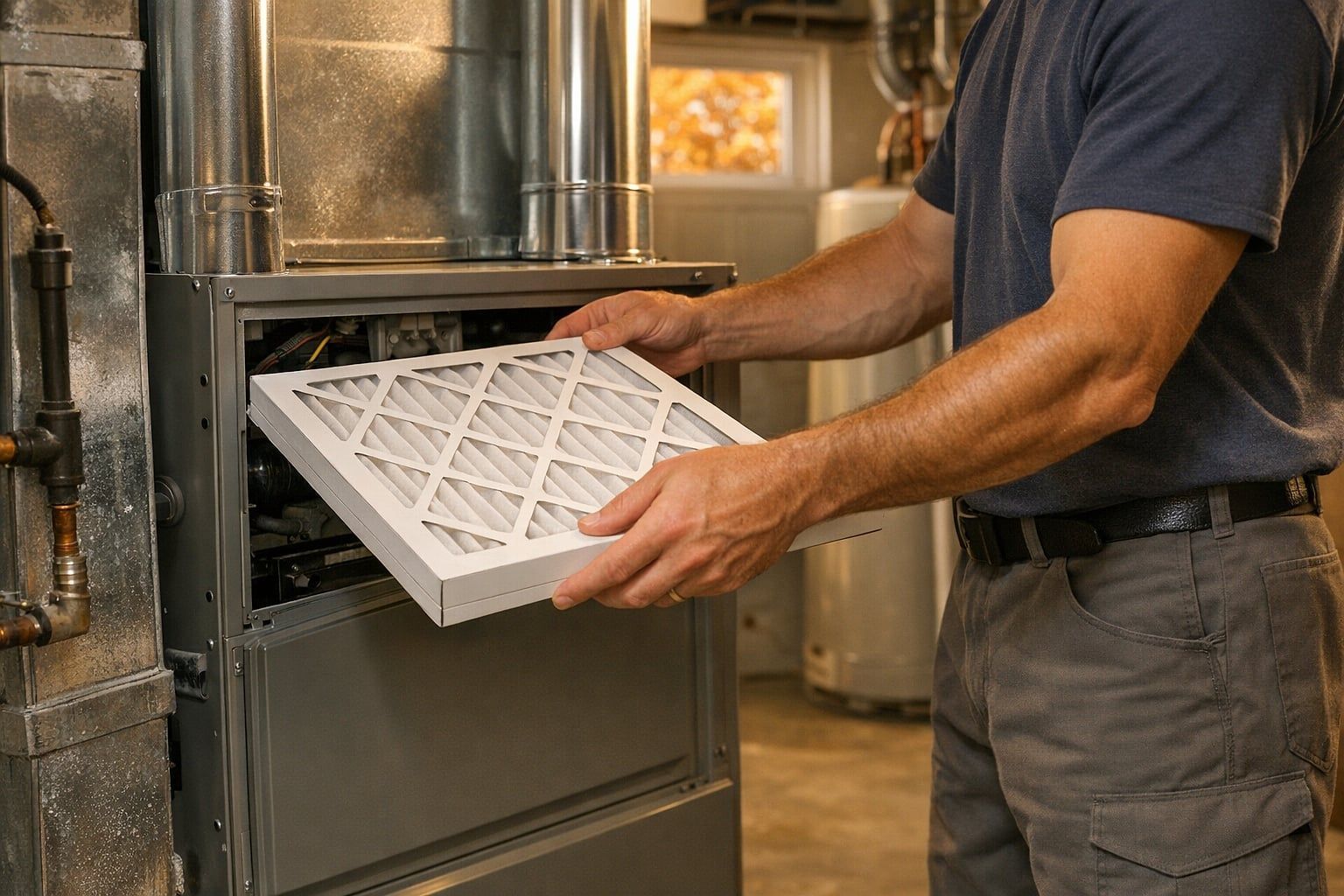
- The filter. Pull it out and hold it up to a light. If you cannot see light through it, replace it and give the system an hour.
- The thermostat. Confirm it is set to cool rather than fan, that the target is below the room temperature, and if it takes batteries, replace them. This solves more calls than people expect.
- The breaker. Air handlers and condensers are usually on separate breakers. If one has tripped, reset it once. If it trips again, stop and call, because a repeatedly tripping breaker indicates an electrical fault.
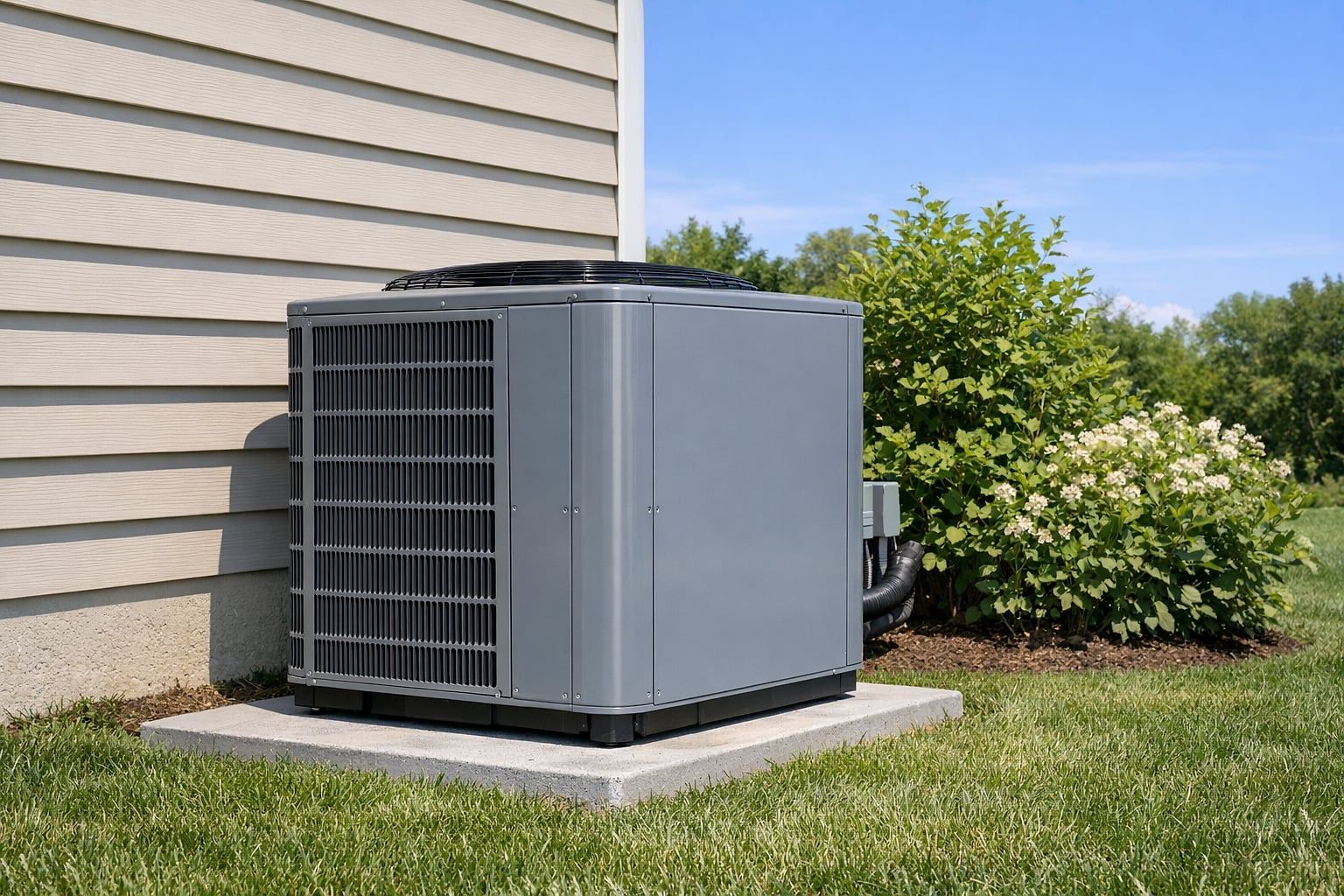
- The outdoor unit. Clear leaves and debris from the fins and cut back anything growing within a couple of feet of it.
If you find ice anywhere on the system, switch the cooling off and set the fan to on. That thaws the coil, which usually takes a few hours. Never chip at ice on a coil, because the fins bend easily and the tubing punctures.
Beyond this, stop. Refrigerant work requires EPA certification, and the capacitor inside a condenser stores a charge that can injure you even with the power off.
When AC Trouble Becomes an Emergency
Most AC problems can wait for a normal appointment. These cannot.
- A burning smell or visible smoke. Shut the system off at the breaker and call immediately.
- A repeatedly tripping breaker. This is an electrical fault, not a nuisance.
- Loud grinding or metallic shrieking , which usually means a failing motor bearing or compressor and gets worse fast.
- Water actively running near the air handler, particularly above finished ceilings.
- Heat with a vulnerable household. Infants, older adults and anyone with a heart or respiratory condition make a hot house a health situation rather than a comfort one.
That last one matters in the Valley more than people assume. A Staunton house that loses cooling during a July heat spell can climb into the nineties indoors by afternoon. That is why we run 24/7 emergency service.
What AC Repair Costs Around Staunton
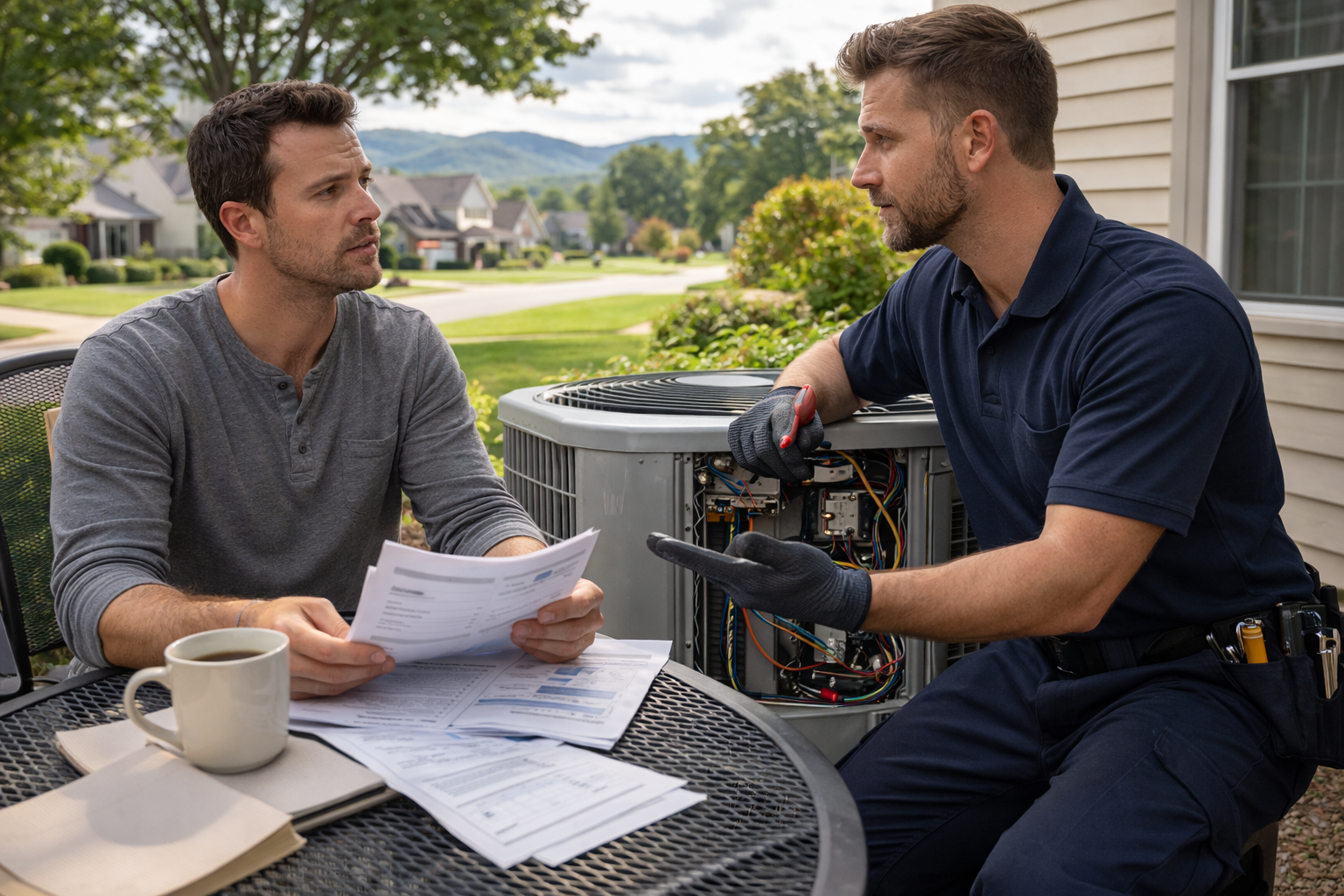
Diagnostics come first, and any honest company charges for the visit and puts that toward the repair. Beyond that, cost depends almost entirely on which component failed.
Small electrical parts such as a capacitor or contactor sit at the low end and are often same-visit fixes. Motor replacements, blower or condenser fan, sit in the middle. Refrigerant leak repair varies enormously depending on where the leak is, because finding it is most of the labor. Compressor replacement sits at the top and is usually the point where replacement enters the conversation.
The number that matters most is not the part, it is whether the repair is worth making on that system at all. Our guide on what a new AC costs in Augusta County lays out replacement figures so you can weigh the two against each other honestly.
AC Repair in Staunton's Older Homes
A lot of Staunton housing stock predates central air entirely, and that shapes what goes wrong.
Ductwork retrofitted into a house never designed for it often runs through unconditioned attics and crawlspaces, where it loses cooling before the air ever reaches a room. Undersized or leaky returns choke the system. And in houses where a second floor was finished later, the upstairs frequently cannot be cooled by a system sized for the original footprint.
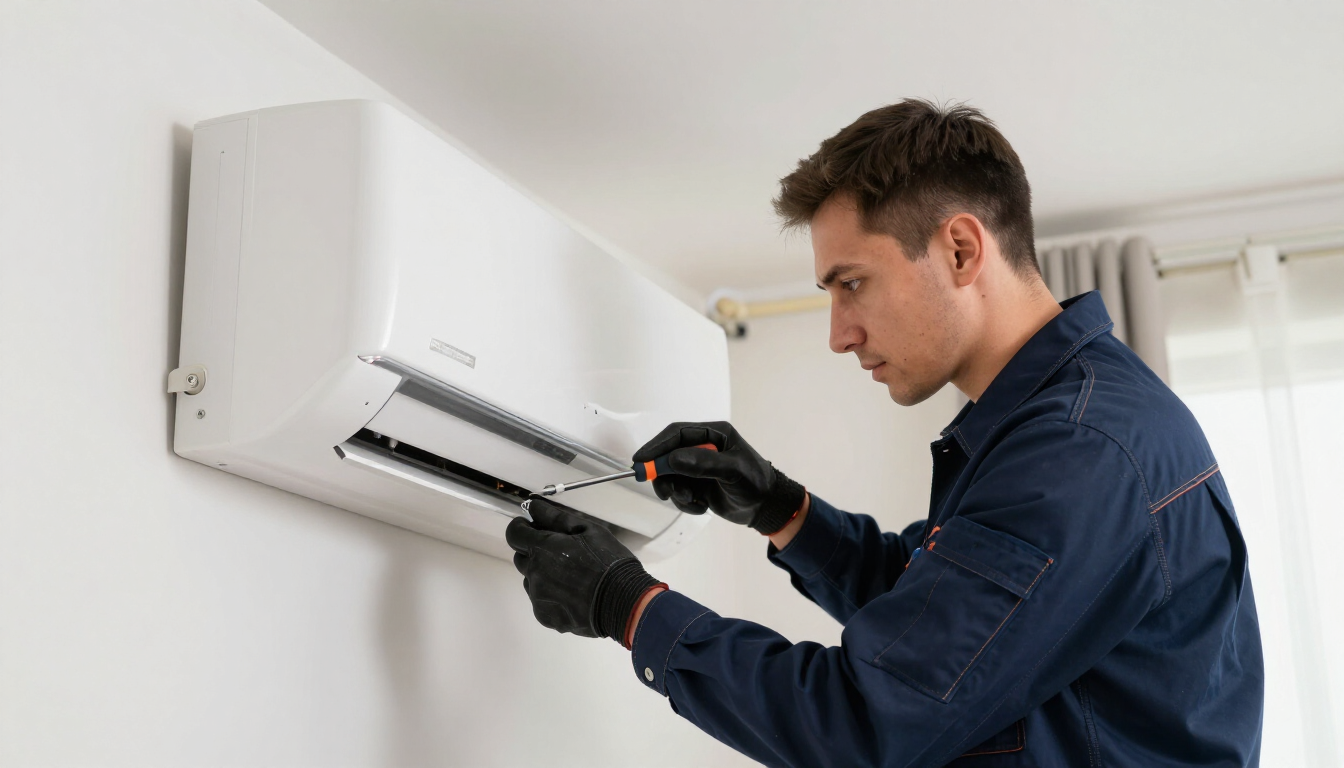
The tell is a house where one room or one floor never gets comfortable no matter what the thermostat says. That is a distribution problem rather than an equipment problem, and replacing the outdoor unit will not fix it. In some of those houses a ductless mini-split for the problem area is a far better answer than fighting the duct system.
How to Keep It From Happening Again
Most of the emergency calls we run in July trace back to something that could have been caught in April. Air conditioners rarely fail without warning, they fail after a season of running harder than they should.
- Change the filter on a schedule, not when you remember. Every one to three months depending on the filter and whether you have pets. This one habit prevents a large share of frozen coils.
- Keep two feet clear around the outdoor unit. Shrubs, fence panels and stacked firewood all restrict the airflow the unit needs to shed heat.
- Rinse the condenser coil. With the power off at the disconnect, a garden hose from the inside out clears the cottonwood seed and grass clippings that pack into the fins every Valley spring.
- Watch the condensate line. A slow drain becomes a clogged drain, and a clogged drain becomes water on a ceiling. If there is a cleanout, flushing it once a season is enough.
- Get it serviced before the season, not during it. A spring tune-up finds a weak capacitor or a low charge while it is still an appointment rather than an emergency.
The economics favor this heavily. A capacitor caught during a scheduled visit is a minor part. The same capacitor failing on the hottest Saturday of the year is an after-hours call, and by then the compressor has often been straining against it for weeks.
What Actually Happens on a Service Call
Knowing the sequence makes it easier to tell a thorough diagnosis from a quick guess.
A technician should start with the symptoms you describe, then check the thermostat call, the filter and the airflow before touching refrigerant. Electrical components get tested with a meter rather than swapped on suspicion. Refrigerant pressures are read against the temperatures on the day, because the same reading means different things at seventy degrees and ninety-five. And if the charge is low, the next step is finding the leak rather than simply adding more.
You should end the visit knowing what failed, why it failed, what it costs to fix, and whether the repair is worth making on a system of that age. If any of those four is missing, ask.
Repair or Replace, Without the Pressure
Repair generally makes sense when the system is under roughly ten years old, the failure is a single component, and it has not been giving you trouble every season.
Replacement starts making more sense when the system is fifteen years or older, when the compressor has failed, when repairs are becoming annual, or when it still uses R-22 refrigerant. R-22 is no longer produced, which makes servicing an R-22 system progressively more expensive.
Heat pumps have their own diagnostic path and are common in Valley homes, so if that is what you have, our guide on why a heat pump is not cooling covers it specifically. For the broader decision, see HVAC replacement versus repair.
Be wary of anyone who diagnoses a failed compressor over the phone, or who will not show you the failed part. Both are signs you are being sold rather than served.
Why Staunton Homeowners Call Integrity Air Solutions
We are based at 199 Elliot Street in Staunton and work across Staunton, Waynesboro, Fishersville, Verona, Crozet, Harrisonburg, Highland County and the rest of Augusta County.
- Same-day service. When your AC quits in July, next week is not an answer.
- 24/7 emergency response , because equipment does not fail during business hours.
- We show you the failed part. If we say a capacitor failed, you get to see the capacitor.
- Straight answers on repair versus replace. If a repair is the better value on your system, that is what we will tell you.
- Local and familiar with the housing stock. Older Staunton homes have particular duct and airflow problems, and knowing that before the visit saves diagnostic time.
Get Your AC Looked At Today
If the filter is clean, the thermostat is set correctly, the breaker is on, and the house still is not cooling, the next step is a technician rather than another thing to try.
Call Integrity Air Solutions at (540) 448-7780. Tell us what the system is doing, whether you see ice anywhere, and whether the outdoor unit is running, and that usually tells us what to bring on the truck.
Frequently Asked Questions
Why is my AC running but not cooling the house?
The most common causes are a clogged filter restricting airflow, a frozen evaporator coil, low refrigerant from a leak, or a dirty outdoor condenser coil. Start by checking the filter and the thermostat setting, since those two account for a large share of calls.
Why is my AC frozen up in the middle of summer?
Ice forms when airflow across the coil is restricted or the refrigerant charge is low. Turn cooling off and set the fan to on so the coil thaws, which takes a few hours. Never chip at the ice, because the fins bend and the tubing punctures easily.
How much does AC repair cost in Staunton?
It depends almost entirely on the failed component. Small electrical parts like a capacitor sit at the low end, motor replacements in the middle, and compressor failure at the top. Any honest company charges a diagnostic fee and applies it toward the repair.
Should I repair or replace my air conditioner?
Repair usually makes sense under about ten years old with a single failed component. Replacement makes more sense past fifteen years, after a compressor failure, when repairs are becoming annual, or if the system still runs on R-22 refrigerant.
Does adding refrigerant fix an AC that is not cooling?
Only temporarily. Refrigerant is not consumed the way fuel is, so a system that is low has a leak somewhere. Recharging without finding and repairing that leak means paying for the same service again the following season.
Do you offer emergency AC repair?
Yes, we offer 24/7 emergency service along with same-day appointments. Burning smells, smoke, a repeatedly tripping breaker, loud grinding, or heat affecting a vulnerable household should all be treated as emergencies rather than waiting.
Why is one room always warmer than the rest of the house?
That is usually a distribution problem rather than equipment failure, and it is common in older Staunton homes where ductwork was retrofitted or a second floor finished later. Replacing the outdoor unit will not fix it, and a ductless mini-split often will.