Every house in the Valley seems to have one. The bonus room over the garage that feels like an oven by 2 p.m. The finished attic that stays ten degrees warmer than the rest of the upstairs. The sunroom nobody uses in July because it doubles as a greenhouse. You crank the thermostat, the rest of the house turns into a meat locker, and that one room is still miserable.
If that sounds like your home, the problem is almost never your thermostat. It is the way the room is built and the way your air is delivered. The good news is there is a fix that targets that one stubborn space without freezing out the rest of the house. It is called a ductless mini-split, and for a lot of Staunton, Waynesboro, and Augusta County homes, it is the cleanest answer we install.
Why one room is always the problem child
A central system is sized and ducted for the original footprint of the house. The minute a room sits outside that plan, comfort starts to slip. A few patterns show up again and again in homes around here:
- Additions and conversions.
Bonus rooms, finished attics, garage conversions, and sunrooms are usually tied into ductwork that was never designed to carry them. The run is too long, the duct is too small, and the air gives out before it reaches the far register.
- Heat rises and sun bakes.
Top-floor and west-facing rooms collect heat all afternoon. A single undersized vent has no chance of keeping up with that load on a 90-degree day.
- A maxed-out main system.
When the central unit is already working at its limit, stealing air for a far room just means somewhere else gets less. You end up robbing Peter to cool Paul.
- Older Valley housing stock.
A lot of homes in Staunton and the surrounding towns predate central air entirely. Ductwork got added later, in whatever path the walls allowed, and the layout was a compromise from day one.
None of these are fixed by turning the thermostat down two more degrees. The air simply is not getting where it needs to go in the volume that room demands.
Why the usual fixes fall short
Most folks try a few things before they call us, and we get it. They are cheap and they are right there at the hardware store. Here is the honest rundown on each:
- Window units
cool one room, but they are loud, they block a window and the view, they let air leak around the edges, and they only handle summer. Come fall you are pulling it out and storing it in the garage.
- Portable AC units
are the least effective of the bunch. They pull warm air back into the room through the exhaust hose, run loud, and barely keep up with a sunny afternoon.
- Box fans
move air around. They do not lower the temperature. On the worst days that is the difference between uncomfortable and slightly-less-uncomfortable.
- Closing vents in other rooms
to force more air to the hot one actually raises pressure in your ductwork and can strain the blower. It treats a symptom and creates a new problem.
What a ductless mini-split actually is
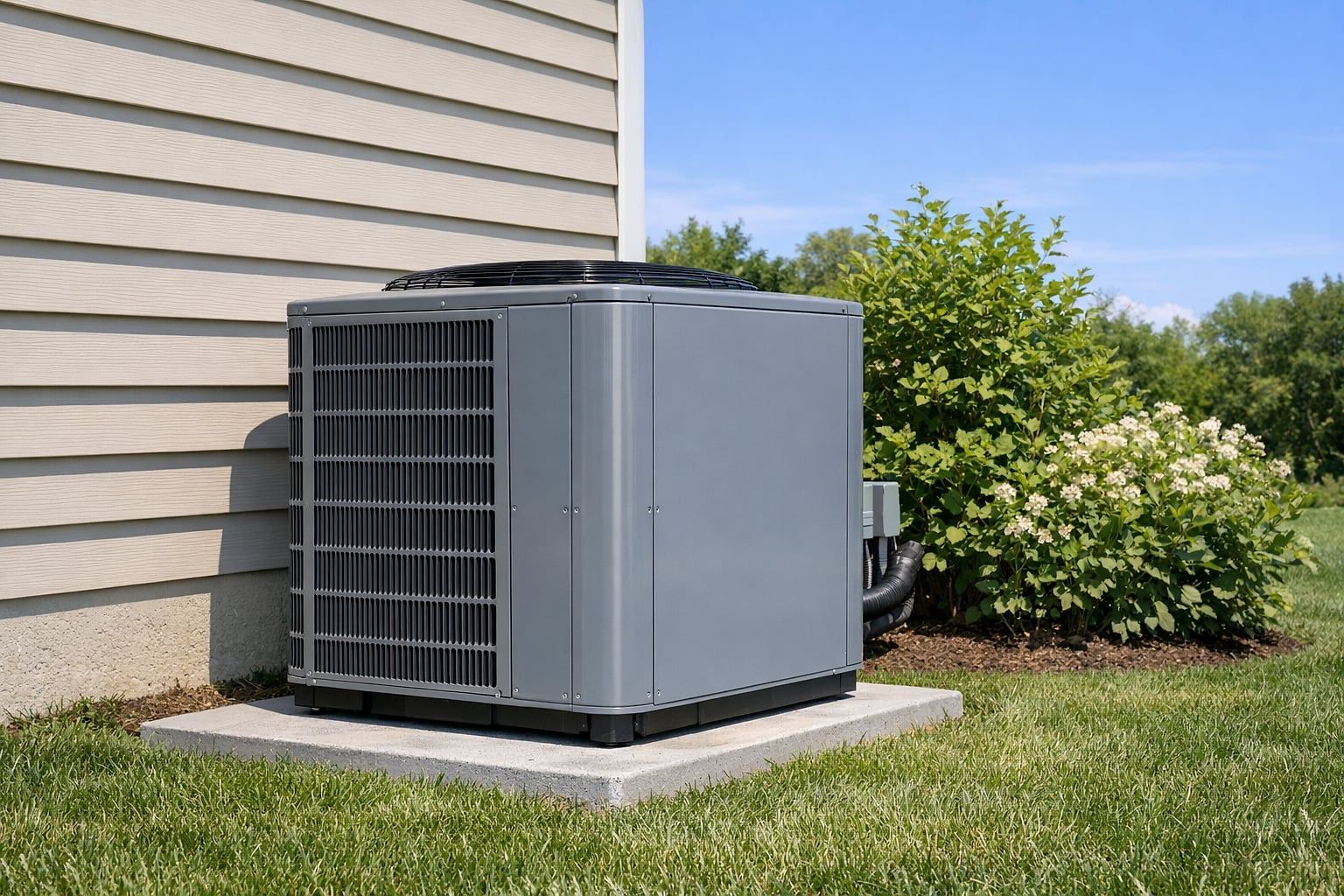
A mini-split is a small, two-part heating and cooling system that serves a single zone, no ductwork required. There is a compact outdoor unit and a slim indoor head that usually mounts high on a wall. The two connect through a small line set that runs through one three-inch hole in the wall. That is the entire footprint.
Because it is its own self-contained system, the hot room gets its own thermostat and its own temperature. You set the bonus room to 70 and leave the rest of the house exactly where the family likes it. The mini-split runs on an inverter compressor, which means instead of slamming on and off like a window unit, it ramps up and down to hold a steady temperature. That is what makes it quiet, comfortable, and easy on your power bill.
One more thing people are surprised to learn: a mini-split is a heat pump. It cools that room in July and heats it in January, so the space that was unbearable in summer is no longer freezing in winter either. One unit, year-round comfort, in the one room that never had it.
Mini-split vs. the alternatives at a glance
| Solution |
Up-front cost |
Energy use |
Noise |
Heats too? |
Lifespan |
| Ductless mini-split
|
Higher to start |
Very low |
Very quiet |
Yes, all year |
15 to 20 years |
| Window AC unit |
Low |
High for the comfort |
Loud |
No, cooling only |
5 to 8 years |
| Portable AC |
Low to moderate |
High, least effective |
Loud |
Some models |
3 to 5 years |
| Extending central ductwork |
High and disruptive |
Can strain the main system |
Quiet |
Tied to main system |
Often impractical for additions |
Rooms where a mini-split is the obvious call
If your trouble spot is on this list, a ductless system is usually the smartest money you can spend on it:
- Bonus rooms and finished spaces over the garage
- Converted attics and upstairs bedrooms that bake all afternoon
- Additions and in-law suites that were never on the original ductwork
- Sunrooms and three-season porches you want to use year-round
- Home offices where comfort and quiet both matter
- Garages, workshops, and detached studios with no HVAC at all
What a mini-split install actually looks like
The part that wins people over is how little disruption it is. A typical single-room install goes like this:
- We size it right first.
Before we quote anything, we measure the room, look at the windows, the insulation, and the sun exposure, and match the unit to the actual load. An oversized unit short-cycles and never dehumidifies properly. An undersized one runs flat out and still loses. Correct sizing is the whole game.
- One small hole.
The line set passes through a single three-inch opening. No tearing open walls or rerouting ducts through your ceiling.
- Usually one day.
Most single-zone installs are wrapped up in a day, often with a dedicated electrical circuit added for the outdoor unit.
- Clean finish.
The indoor head is slim and quiet, and the outdoor unit is compact enough to tuck along a side wall out of sight.
As for cost, a single-zone mini-split installed in one room typically runs in the few-thousand-dollar range, depending on the size of the unit, the run of the line set, and the electrical work involved. That is more than a window unit up front, and it buys you fifteen-plus years of quiet, low-power, year-round comfort instead of a noisy box you wrestle in and out of a window every season. We give you a clear quote before any work starts, with no pressure and no surprise add-ons.
As a Certified Comfort Expert serving the Valley, we install and service ductless systems across Staunton, Waynesboro, Fishersville, Harrisonburg, and the rest of Augusta County. Honest sizing matters even more in our older housing stock, where every addition and conversion has its own quirks, and a one-size guess usually misses.
Tired of fighting that one hot room?
Let us take a look. We will measure the space, walk you through your options, and give you a straight answer on whether a ductless mini-split is the right fix. No pressure, just honest advice from a local team that lives here too.
Call or text (540) 448-7780
or request a quote online. Want the full rundown first? See our new install options
and HVAC services.
Frequently asked questions
What causes one room to be so much hotter than the rest of the house?
Usually the room sits outside what your central system was built to handle. Additions, garage conversions, finished attics, and sunrooms often run on ductwork that is too small or too long for the job, and top-floor or west-facing rooms collect heat all afternoon. The thermostat is not the problem. The air delivery is.
Will a ductless mini-split work in an older Valley home with no ductwork?
Yes, and that is exactly where it shines. A mini-split needs no ducts at all, just a small line set through one three-inch hole. That makes it ideal for older Staunton and Waynesboro homes, additions, and rooms central air never reached.
How much does a mini-split cost to install?
A single-zone system installed in one room typically lands in the few-thousand-dollar range, depending on unit size, line-set length, and electrical work. We give you a clear quote up front before any work begins.
Can a mini-split heat the room in winter too?
It can. A mini-split is a heat pump, so the same unit that cools the room in summer warms it in winter. The space that was unbearable in July stops being freezing in January.
How long does a mini-split installation take?
Most single-room installs are done in a day. The indoor head mounts high on the wall, the outdoor unit tucks along a side wall, and we add a dedicated electrical circuit if the room needs one.